|
The over three decades long conflict in Afghanistan, with its many disastrous episodes of violence, has hardly spared any resident of the country who has not suffered some levels of mental trauma. Although no large scale reliable data are available about the mental health status of the people, the term “mentally ill” refers only to those who are almost not capable of maintaining their day-to-day life because of their mental condition while some of them may threat life and wellbeing of others in the society.
Generally, because of lack of education, economic underdevelopment and lack of health services, usually individuals and families don't seek mental health care until the patient is terribly ill. Even when families have to do something about a mentally abnormal family member, they don't have access to proper health services and management, and mental counseling is available to very limited level, merely available in major cities, and that is only confined to empirical medication.
With all these miseries, for majority of the people there exist a viable alternative, which is even their first choice to try, and that is seeking assistance from spiritual people, such as Mullah, Sayyed, Pir, Agha, Sufi, Malang, and holly places such as shrines, specific water springs and even rocks perceived being sacred. Among these, the shrine of Mia Ali sahib, in the outskirt of Jalalabad city in the eastern Nangarhar province is one of those places well known for treating mentally ill patients.
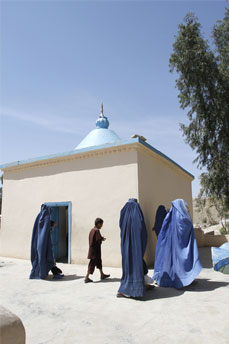 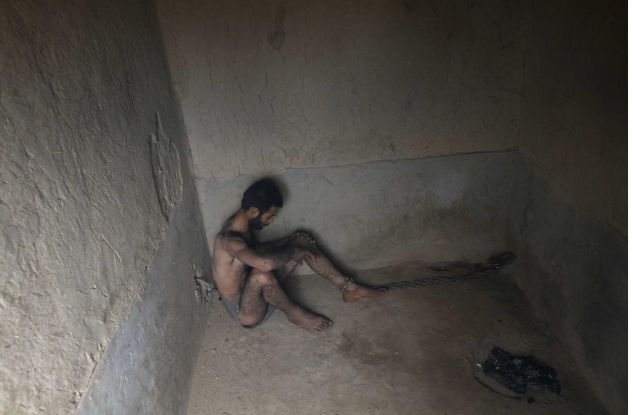 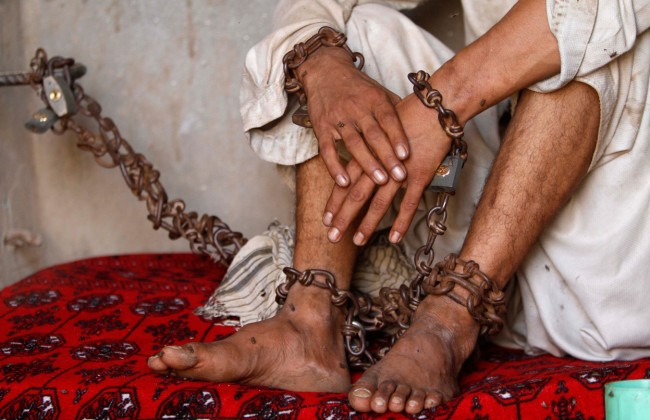 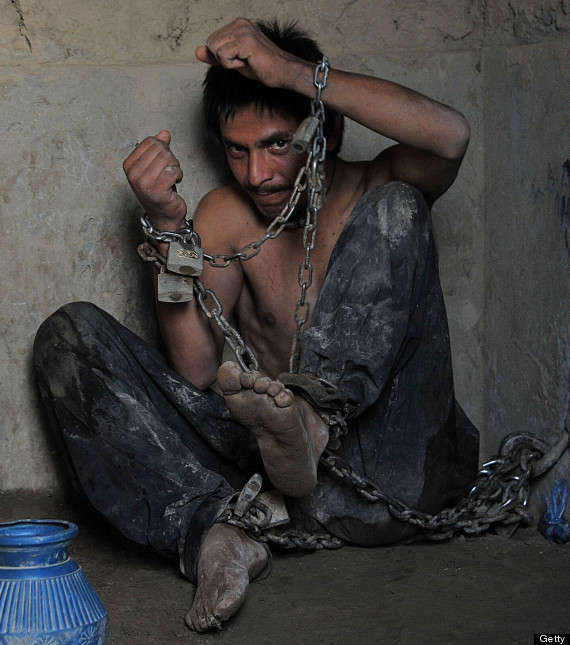
The Shrine of Mia Ali Sahib, which is the tomb of a spiritual figure Mia Ali Shah, is a place where the mentally ill people are chained for 40 days receiving only water and bread and certain prayers and amulets from the shrine's care takers. The shrine has chambers and a group of people, who claim to be descendents of Mia Ali Shah, who serve the subjects. This place has been in use for over three centuries to treat mentally ill people, particularly those who assume violence at their homes or pose threat to themselves and others. Even drugs addicts are nowadays brought by some families for treatment.
Although there is no system or will to track those chained in the shrine for treatment, the caretakers of the shrine and many ordinary people strongly believe in the extraordinary power and influence of the shrine and dozens of patients are chained and treated in this place every year.
Note: images are taken from the internet.
|